
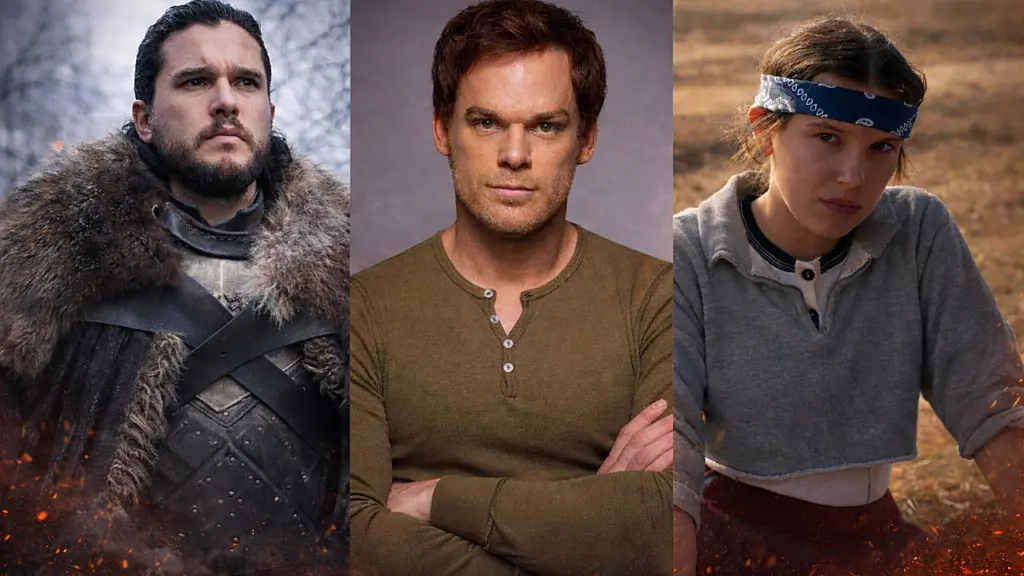
Every TV fan has experienced it: a brilliant series, years of emotional investment… and then a finale that completely ruins everything. You got a series that captures your interest. It’s top-notch from top to bottom: great actors, terrific storylines, intriguing hooks that keep you coming back for more. They manage to do it season after season, so you think, awesome, I can get invested in this story and cannot wait to see how it ends. And then comes the finale, and you are waiting with bated breath how all of that will pay off… only for it to let you down in the worst way possible: storylines that go nowhere, characters getting unfair endings, and inexplicable last-ditch plot twists. It’s infuriating – and you’re not the only one, because it apparently pisses off so many loyal viewers like you. Many shows have committed this grave mistake, but none did so as outrageously as these seven shows, which turn loyal devotion into mass anger by the time the final credits roll.
What is considered the worst TV series finale ever?
Many fans consider Game of Thrones the worst TV series finale ever due to rushed storytelling, abrupt character shifts, and unresolved arcs. Other controversial endings include Dexter, How I Met Your Mother, and Killing Eve.
Worst TV Series Finales Ranked: Shows That Disappointed Fans the Most
7. Sherlock Finale Explained: Why Fans Were Disappointed
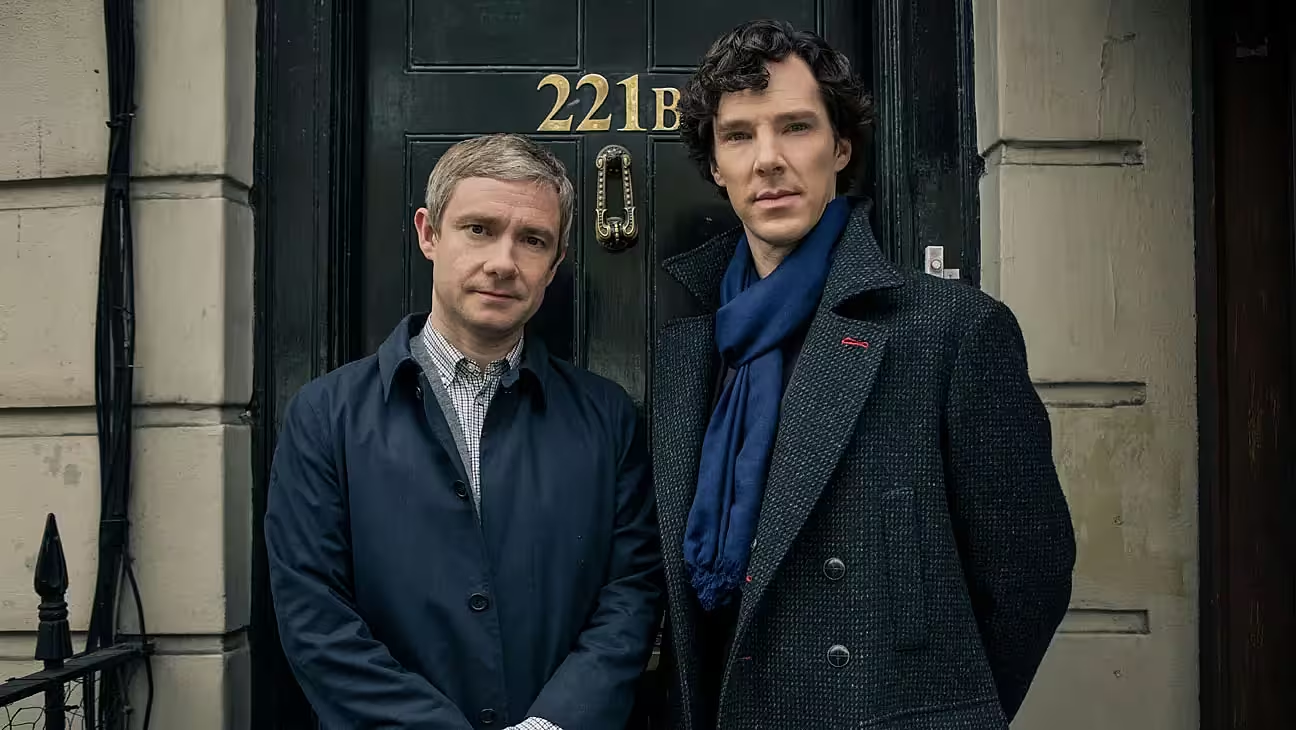
The BBC’s Sherlock concluded with “The Final Problem,” an episode that introduced Eurus Holmes — Sherlock’s previously unmentioned sister — as an almost mythic criminal mastermind orchestrating a deeply personal psychological game.
Though the show retained its stylish visual and cinematic execution, the ending lost the intellectual tension and taut logic that defined its earlier seasons. By the finale, logic took a backseat to spectacle. Eurus wasn’t just brilliant; she was borderline omnipotent, manipulating events with a level of control that strained credibility even within the show’s heightened tone.
Critics took issue with how abruptly Eurus was inserted into the narrative. A long-lost sibling with god-tier psychological manipulation skills is a massive addition to a character’s backstory. Introducing her at the very end left little room for emotional investment.
Fans who adored the chemistry between Sherlock and John Watson — the banter, the friction, the mutual dependence — found that dynamic overshadowed by elaborate psychological trials. The finale leaned heavily into trauma and melodrama, pushing characters into extreme scenarios that blurred the line between mind games and near-fantasy. For some, it crossed from gripping to exhausting.
Like several finales before it, the disappointment wasn’t about wanting a happier ending. It was about wanting an ending that felt like Sherlock. When a show becomes beloved for a specific rhythm — sharp dialogue, clever reasoning, character-driven tension — shifting into grand theatricality at the final hour can feel less like evolution and more like drift.
READ NEXT: Top 7 Scariest Horror Movies Ranked
6. Pretty Little Liars Finale Twist Backlash
Worst TV series finales
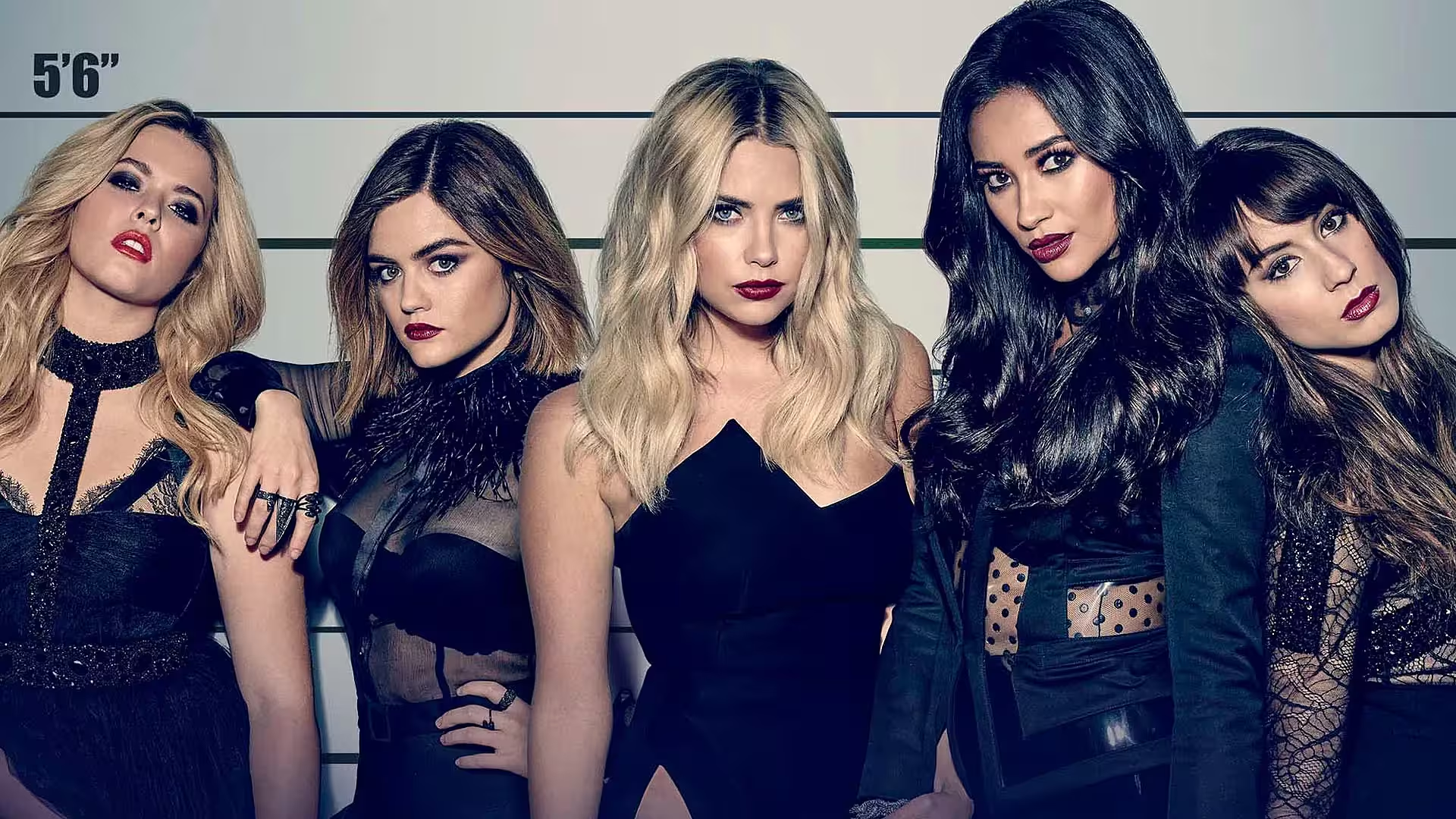
After seven seasons of secrets, shifting alliances, ominous text messages, and more red herrings than anyone could reasonably track, Pretty Little Liars finally unmasked A.D. as Alex Drake — Spencer Hastings’ previously unknown British twin.
Yes. A secret twin. With an accent.
To be fair, this is a show that never aimed for grounded realism. It thrived on heightened drama, elaborate traps, underground lairs, and villains who somehow had unlimited tech budgets. Suspension of disbelief was part of the fun. But even within that heightened universe, the Alex Drake reveal felt like it came out of nowhere. The groundwork simply wasn’t there in a meaningful way. Good twists feel surprising in the moment and inevitable in hindsight. This one mostly felt… sudden.
Introducing a secret identical twin in the final stretch is the narrative equivalent of pulling a rabbit out of a hat when you’ve run out of cards. Instead of deepening the mystery, it reframed it retroactively. The show spent years encouraging fans to comb through clues, decode dialogue, and build intricate theories. Then it handed them an answer that hadn’t really been seeded across the seasons in a satisfying way. The mechanics of the reveal required a rush of exposition to explain motivations, backstory, and logistics — never a great sign in a finale.
And that neatness was part of the issue. After years of paranoia, betrayal, and psychological manipulation, the ending tied things together with a glossy bow. Weddings, happy futures, stability. It wasn’t the happiness that bothered people; it was how cleanly it all arrived after such labyrinthine chaos. For a series built on the thrill of unraveling secrets, the final answer left many viewers feeling like the puzzle pieces never quite fit.
READ NEXT: The 7 Best Mini-Series of All Time (Ranked)
5. The Umbrella Academy Ending Problems
Worst TV series finales
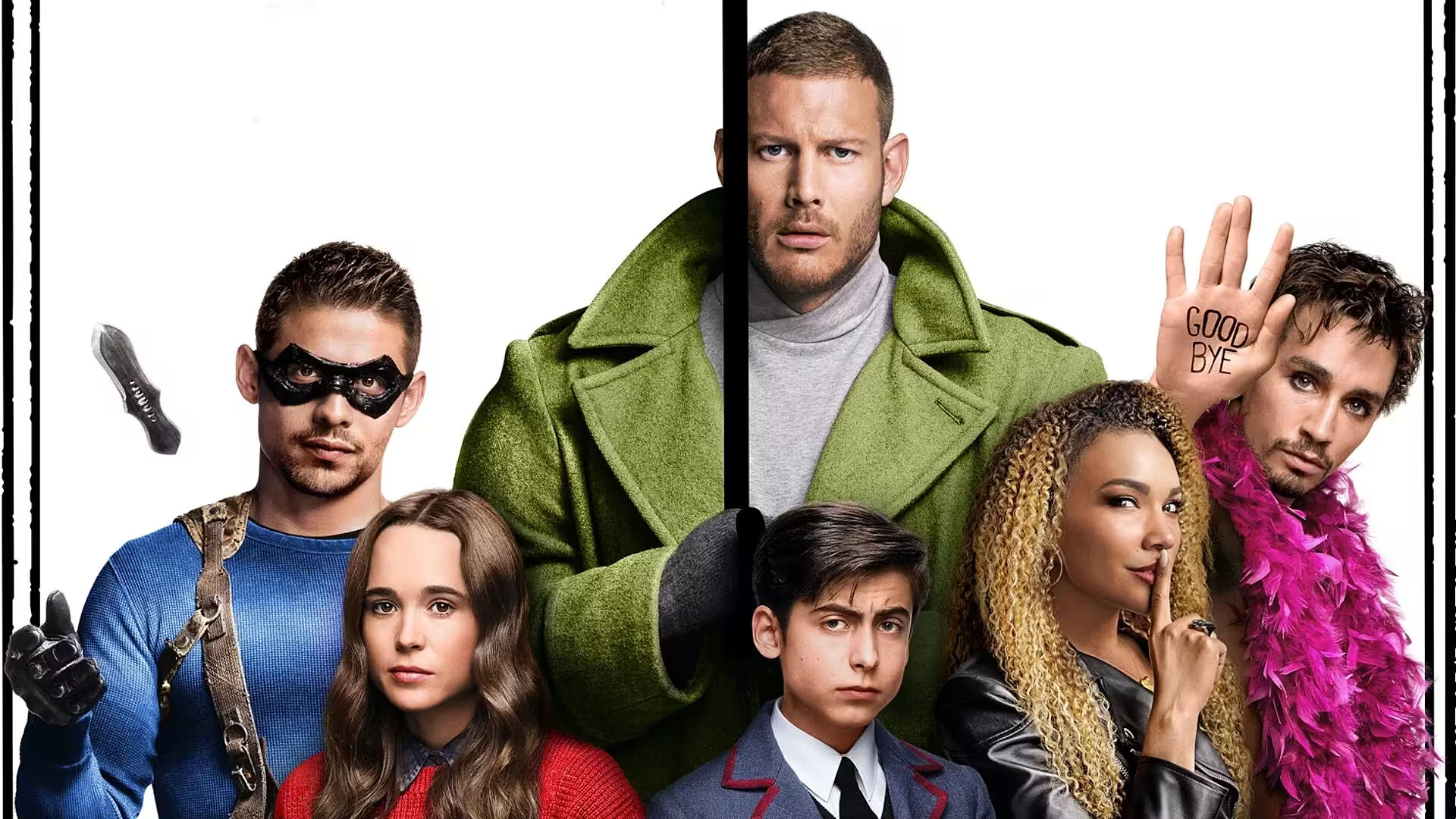
By its final season, The Umbrella Academy was juggling timelines, alternate universes, apocalyptic threats, and a mountain of family trauma. The finale saw the Hargreeves siblings choose to reset the universe, sacrificing their powers to restore balance.
Conceptually, it fits the show’s themes of family and sacrifice. Execution-wise, it felt overloaded. The series always embraced chaos, but in the finale, exposition piled up in an effort to untangle dense mythology. Emotional beats were squeezed between cosmic explanations.
Fans who loved the show’s messy, anarchic energy found the resolution surprisingly tidy. Characters defined by dysfunction and unresolved pain arrived at neat stopping points with limited introspection. The weirdness that once felt intentional and vibrant seemed streamlined into something safer. Instead of cathartic chaos, the ending felt like a cleanup operation.
READ NEXT: 7 Movies That Are Better Than The Books
4. Killing Eve Finale Controversy
Worst TV series finales
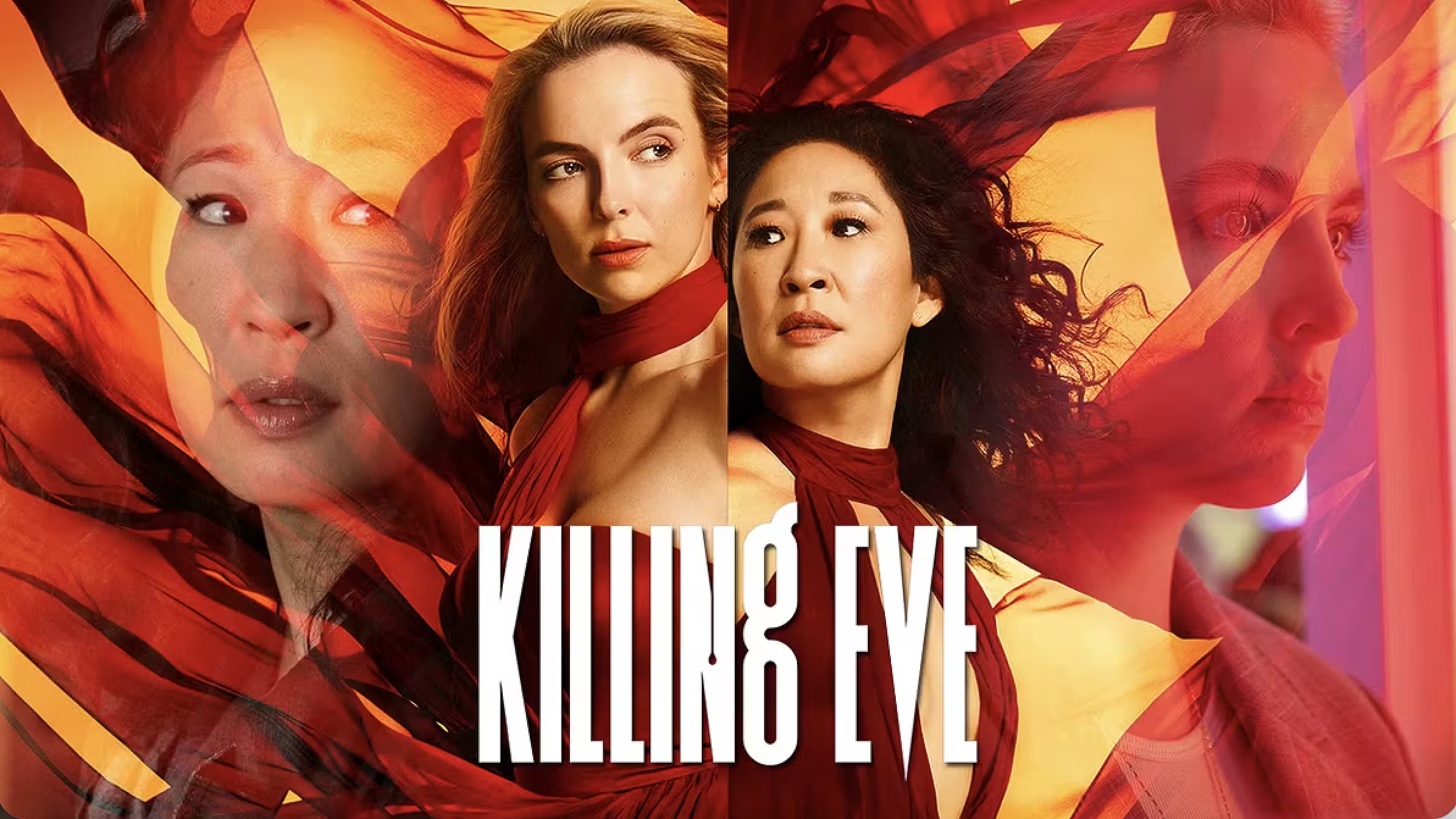
Killing Eve thrived on the electric tension between Eve Polastri and Villanelle. Their dynamic was playful, dangerous, obsessive — and deeply layered. The final episode finally allowed them to embrace that connection romantically. And then, almost immediately, Villanelle was shot by a sniper and killed.
That ending was a whiplash of murderous proportions. It’s not just about Villanelle dying; it’s about the questionable, entirely nonexistent buildup prior to that ending. The finale pivoted to abrupt tragedy without giving the moment room to breathe. Villanelle’s death happened so quickly that it barely had space to resonate before the credits rolled.
Fans were understandably livid. After years of slow-burn buildup and emotional complexity, the ending felt punitive to some — as if the show granted fulfillment only to snatch it away seconds later. The central relationship was the show’s heartbeat. Ending it so suddenly left viewers wondering whether the series truly understood the emotional investment it had cultivated. It also repeated a harmful, old stereotype of nerfing queer characters, denying them a happy ending without any believable reason.
READ NEXT: 7 Great Movies That Deserve a Sequel (But Never Got One)
3. Dexter Ending Explained: The Lumberjack Twist
Worst TV series finales
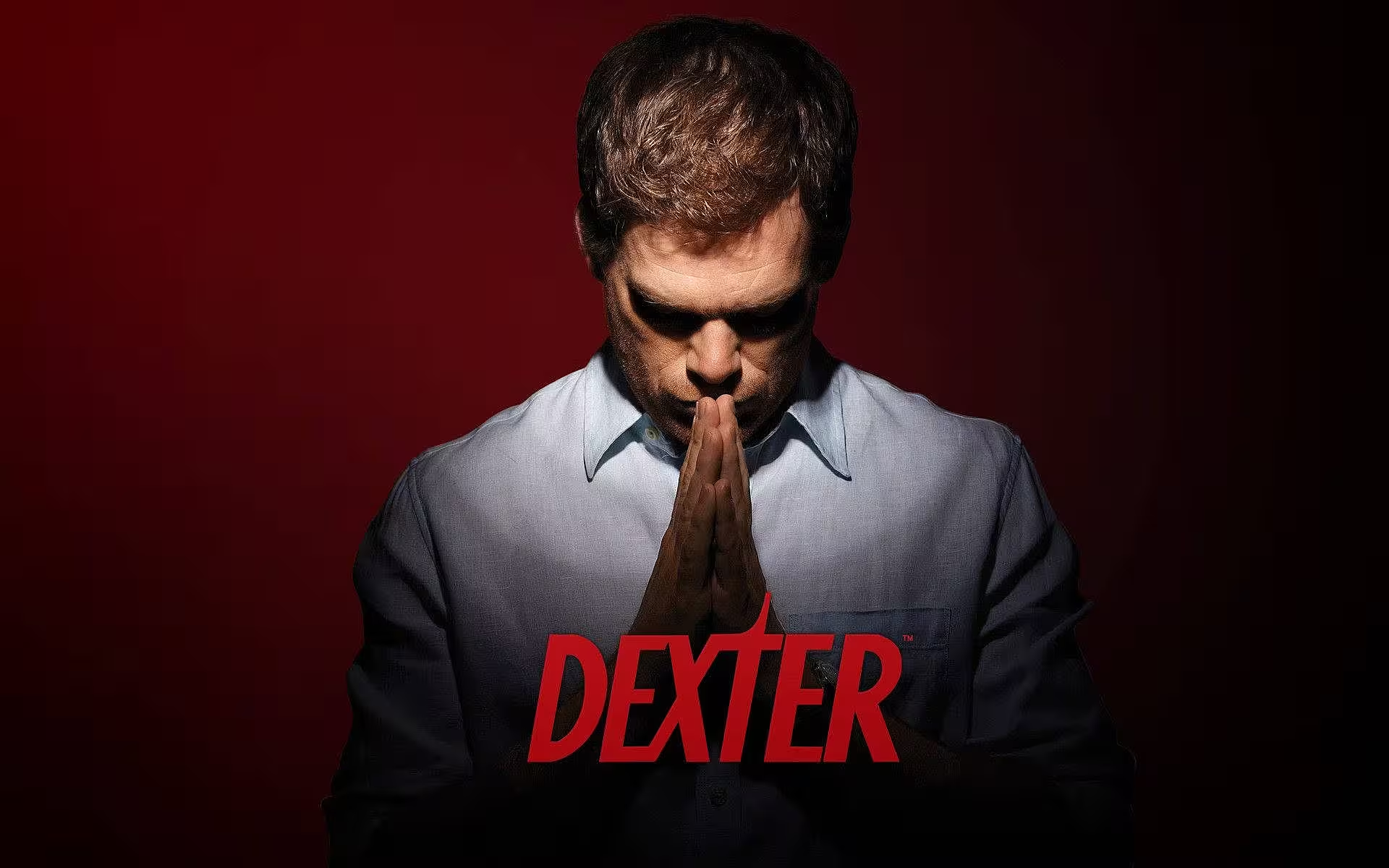
The original Dexter finale delivered one of the most head-scratching images in TV history. After Debra’s death, Dexter Morgan sails into a hurricane, seemingly dying at sea. Except he doesn’t. He resurfaces as a bearded lumberjack living in isolation in Oregon.
The frustration wasn’t about tragedy. It was about avoidance. For years, the series toyed with the idea that Dexter’s double life would implode. The tension came from the inevitability of consequence. Instead of a reckoning, viewers got exile. The moral tightrope the show had balanced on for eight seasons simply… snapped without resolution.
The abrupt shift felt almost surreal. The ending tried to be somber and reflective but veered into accidental absurdity. Fans, meanwhile, felt denied catharsis. Dexter’s complexity — the tug-of-war between monster and man — was the show’s engine. Watching him quietly remove himself from the world without confrontation or accountability felt evasive. The lumberjack look became shorthand for an ending that ducked its own thematic promises.
READ NEXT: The 7 Best Movie Soundtracks of the 21st Century
2. How I Met Your Mother Finale Backlash
Worst TV series finales
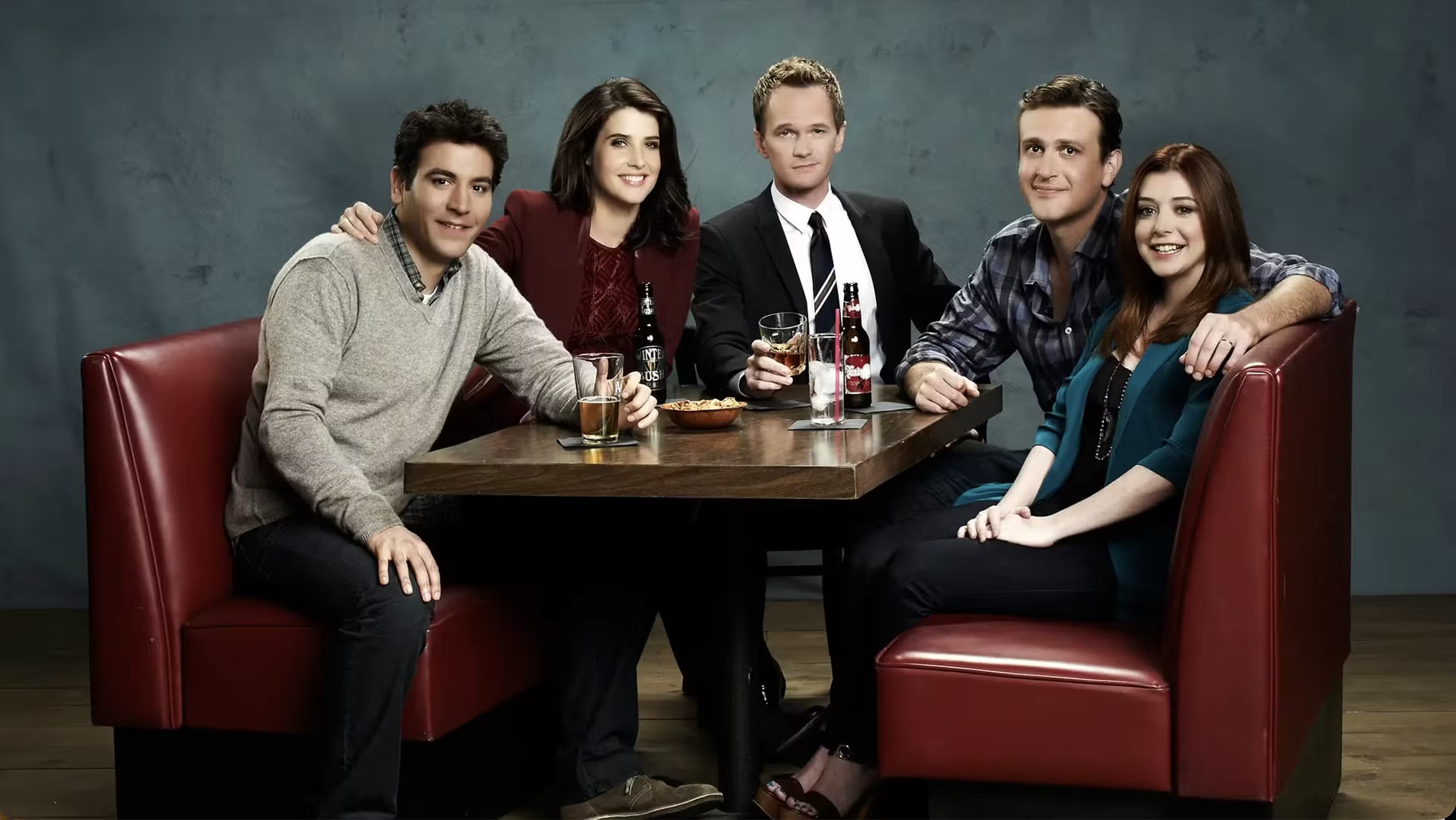
After nine seasons built around one central question, How I Met Your Mother finally gave viewers the answer. In “Last Forever,” Ted meets Tracy, they fall in love, build a life together, and then she dies. Years later, nudged by his kids, Ted shows up at Robin’s apartment with the blue French horn.
The issue here runs deep. The finale stuck to an ending conceived early in the show’s life, even though the characters had evolved far beyond that original blueprint. The entire final season revolved around Barney and Robin’s wedding, only for their marriage to dissolve in a matter of minutes. Barney’s growth — one of the more satisfying arcs in the series — abruptly regressed. And Tracy, who had been charmingly developed and warmly embraced by fans, ultimately felt like a plot device to circle Ted back to Robin.
The tonal disconnect was palpable. The show had matured emotionally, but the ending clung to an older version of itself. Fans felt like they’d invested years into relationships that were casually undone to preserve a twist. Instead of feeling like a natural conclusion, the finale came off like the writers hit a reset button at the last possible second — prioritizing symmetry over emotional truth.
READ NEXT: 7 Underrated Sci-Fi Movies Everyone Needs to Watch
1. Game of Thrones Finale: Why Fans Called It the Worst Ever
Worst TV series finales
This one’s easy.
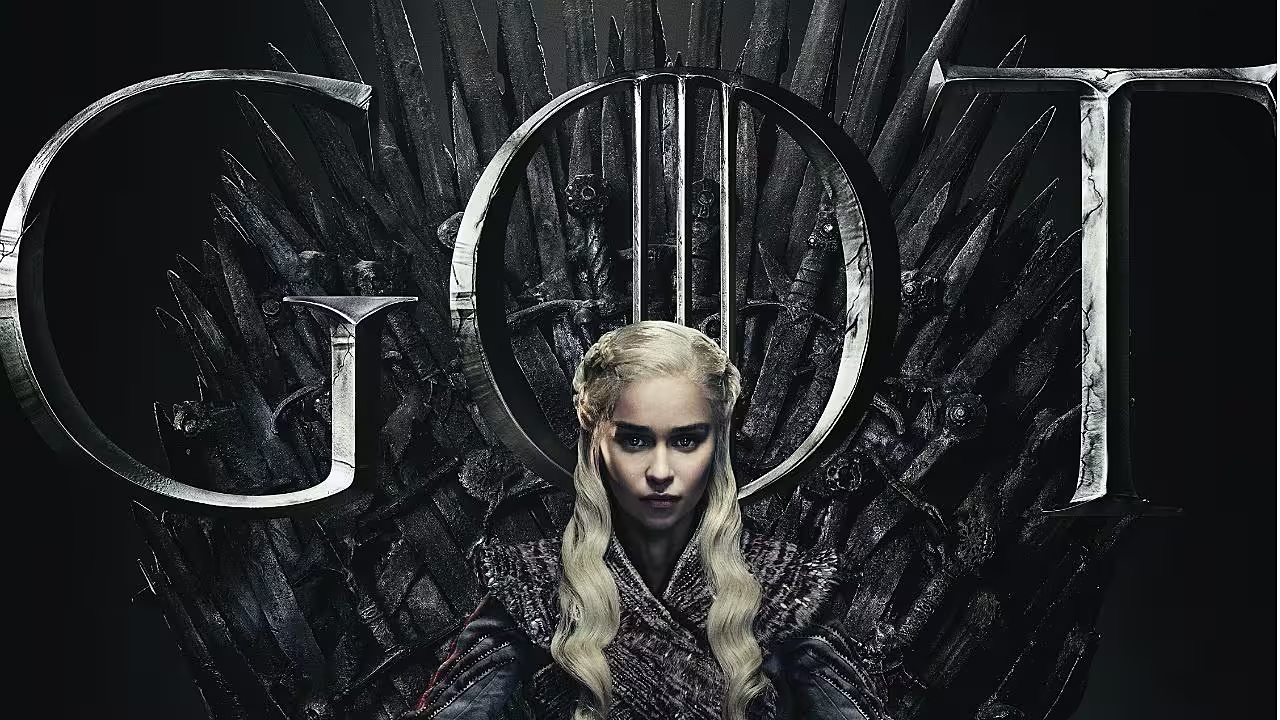
The final episode of Game of Thrones, “The Iron Throne,” tried to wrap up a massive, politically tangled fantasy epic in just over an hour. After Daenerys Targaryen torches King’s Landing in the episode before, Jon Snow kills her to stop the carnage. Tyrion delivers that now-infamous speech about the power of stories, Bran Stark is voted king, Sansa secures the North’s independence, Arya heads off to explore what’s west of Westeros, and Jon returns to the Night’s Watch.
On paper, none of those outcomes is inherently outrageous. The problem wasn’t that Daenerys turned tyrant or that Bran ended up on the throne. It was how fast everything happened. This was a show that built its reputation on slow-burning character development and carefully laid political maneuvering. In the final stretch, years of emotional groundwork seemed to sprint toward abrupt pivots. Jaime Lannister’s redemption arc unraveled in what felt like a blink. Daenerys’ inner turmoil compressed into a single, catastrophic decision. The pacing made seismic shifts feel oddly weightless.
Fans didn’t just dislike the ending — they felt whiplash. After nearly a decade of theorizing, dissecting, and debating every prophecy and glance, the resolution landed with a thud for many. The intricate political chess match that once defined the series gave way to what felt like narrative convenience. The dragons were still impressive. The production value was still there. But the internal logic that once made Westeros feel real seemed to melt away under the pressure to finish.
READ NEXT: 7 Best Movie Trilogies of All Time
FAQ: Worst TV Series Finales
Why do TV finales disappoint fans?
Finales often struggle to balance fan expectations, character arcs, and story closure, leading to rushed pacing or controversial decisions.
Which TV finale upset fans the most?
Game of Thrones is widely considered the most controversial finale due to its pacing and character resolution.
Are bad TV endings common?
Yes. Even critically acclaimed series like Dexter and How I Met Your Mother faced backlash for their finales.